交番
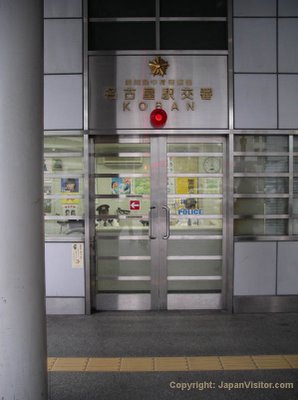
One readily recognizable feature of Japan's streetscape are its police boxes or koban.
There are now approximately 6,509 koban (police boxes) throughout Japan (2004 figures). Koban began as small shelters for Tokyo's fledgling police service in the 1880s. One of the newly modernized Japan's government advisors, a German named William Hoehn, oversaw a massive increase in the number of local police stations from 1,560 in 1880 to 12,832 in 1890 - an important part of the early Meiji oligarchy's firmer hold over the newly reforged nation. Koban are supposedly manned around the clock, though it is not uncommon to see the smaller koban left vacant. Koban have been touted as the answer to rising street crime in several countries, and police forces from the UK and USA have had a look at the system. It has been adopted to a certain extent in Brazil, Fiji, Mongolia and Singapore.

Koban are often located near stations and busy entertainment areas and are supposed to act as a community policing center: a deterrent to criminal activity as well as providing a rapid response post in the case of actual wrongdoing. More often koban are used by the public to ask directions and find addresses (the police have excellent local maps) and to report lost property. Koban usually have a red light or lights above the doors.

The role of koban as a deterrent has been called into question after incidents involving people running into police boxes to escape a beating or much worse from the yakuza (Japan's mob), some have been dragged out from under the noses of the frightened cops. Koban are certainly not staffed by the elite of Japan's police force, more often elderly or young officers (female officers are not usually seen in koban outside Tokyo and don't do the night shift).
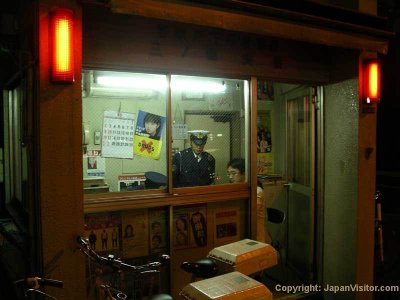
Each koban is usually staffed by a group of 4 police - 3 officers under the command of a sergeant working on 3 shifts of 8 hours under the control of the city or ward police station. In rural Japan, koban are replaced by 駐在所 chuzaisho (residential police boxes), where a single officer and his family live.
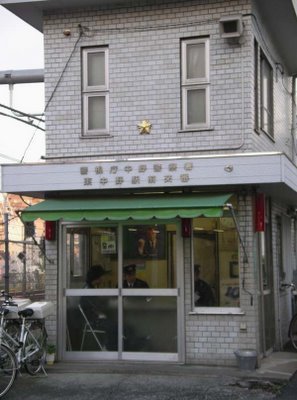 Koban outside Higashi-Nakano station, Tokyo.
The architectural style of Japan's koban is predominately gray steel or concrete boxes, but Tokyo especially does have some interesting designs. My personal preference for a big pink plasticky Porky the Pig's head with doors in the snout has not been realized to date.
More images of koban
Tokyo koban
Japanese police
Guide to Japan - JapanVisitor

Koban police box in Nagoya station.
One readily recognizable feature of Japan's streetscape are its police boxes or koban.
There are now approximately 6,509 koban (police boxes) throughout Japan (2004 figures). Koban began as small shelters for Tokyo's fledgling police service in the 1880s. One of the newly modernized Japan's government advisors, a German named William Hoehn, oversaw a massive increase in the number of local police stations from 1,560 in 1880 to 12,832 in 1890 - an important part of the early Meiji oligarchy's firmer hold over the newly reforged nation. Koban are supposedly manned around the clock, though it is not uncommon to see the smaller koban left vacant. Koban have been touted as the answer to rising street crime in several countries, and police forces from the UK and USA have had a look at the system. It has been adopted to a certain extent in Brazil, Fiji, Mongolia and Singapore.
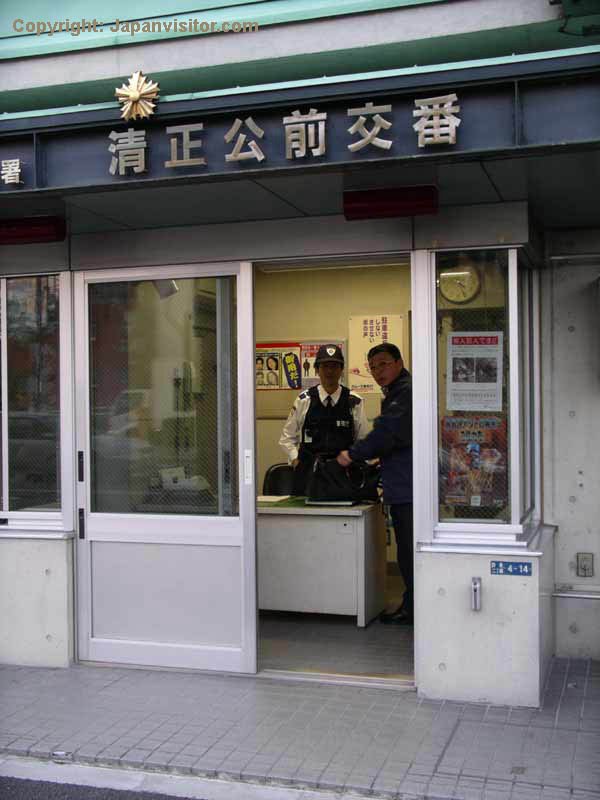
Neighborhood koban police box in the Shirokanedai, Minato ward. Tokyo.
Koban are often located near stations and busy entertainment areas and are supposed to act as a community policing center: a deterrent to criminal activity as well as providing a rapid response post in the case of actual wrongdoing. More often koban are used by the public to ask directions and find addresses (the police have excellent local maps) and to report lost property. Koban usually have a red light or lights above the doors.

Downtown koban police box in Shinjuku ward. Tokyo.
The role of koban as a deterrent has been called into question after incidents involving people running into police boxes to escape a beating or much worse from the yakuza (Japan's mob), some have been dragged out from under the noses of the frightened cops. Koban are certainly not staffed by the elite of Japan's police force, more often elderly or young officers (female officers are not usually seen in koban outside Tokyo and don't do the night shift).
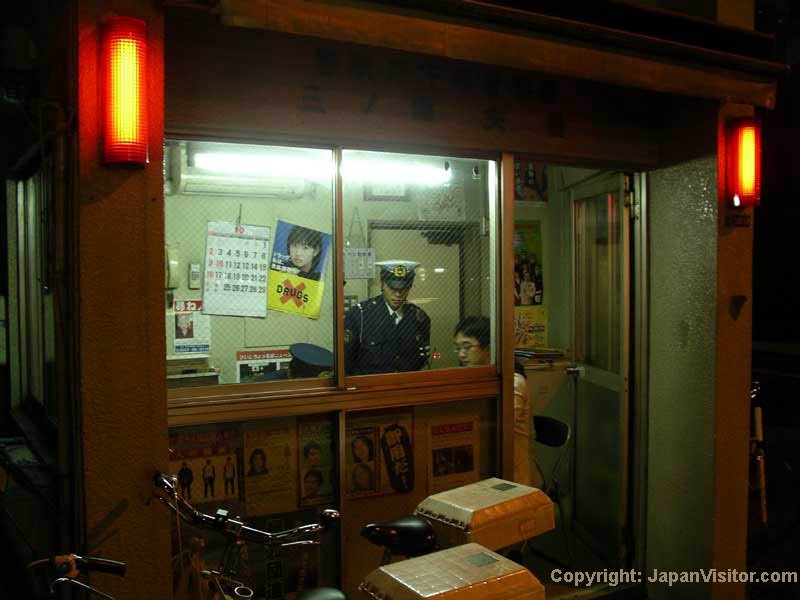
Koban at night, Daito ward, Tokyo
Each koban is usually staffed by a group of 4 police - 3 officers under the command of a sergeant working on 3 shifts of 8 hours under the control of the city or ward police station. In rural Japan, koban are replaced by 駐在所 chuzaisho (residential police boxes), where a single officer and his family live.
 Koban outside Higashi-Nakano station, Tokyo.
More images of koban
Tokyo koban
Japanese police
Guide to Japan - JapanVisitor
Post a Comment