俳句

The Haiku Handbook: How to Write, Share, and Teach Haiku
by William J. Higginson
Kodansha International
ISBN:4-7700-1430-9
352 pp
First published in 1985 and superseded only partially by more recent books, The Haiku Handbook remains the best introduction to haiku written in English. It occupies a niche between the works of Harold G. Henderson and R. H. Blyth, being more comprehensive than the former without the koan-like paradoxes of the latter.
In addition to chapters fulfilling the title's promise to show how to write, share, and teach haiku, it also includes a short history of haiku from Basho's predecessors to modern haiku around the world, as well as chapters on related genres such as senryu and haibun. Although The Haiku Handbook is geared towards newcomers to the genre, it also contains material of interest to more experienced haijin (haiku poets). This includes in-depth discussions on Buson's "Visit to Uji" and Basho's revisions of one of his most famous haiku, as well as a season word list for quick reference.
Apart from the outdated resource section, this book is still one of the clearest and most comprehensive introductions to haiku in English and is also a handy reference work for experienced poets.
Peter D. Evan
Buy this book from Amazon
USA
UK
Japan
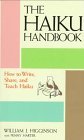
The Haiku Handbook: How to Write, Share, and Teach Haiku
by William J. Higginson
Kodansha International
ISBN:4-7700-1430-9
352 pp
First published in 1985 and superseded only partially by more recent books, The Haiku Handbook remains the best introduction to haiku written in English. It occupies a niche between the works of Harold G. Henderson and R. H. Blyth, being more comprehensive than the former without the koan-like paradoxes of the latter.
In addition to chapters fulfilling the title's promise to show how to write, share, and teach haiku, it also includes a short history of haiku from Basho's predecessors to modern haiku around the world, as well as chapters on related genres such as senryu and haibun. Although The Haiku Handbook is geared towards newcomers to the genre, it also contains material of interest to more experienced haijin (haiku poets). This includes in-depth discussions on Buson's "Visit to Uji" and Basho's revisions of one of his most famous haiku, as well as a season word list for quick reference.
Apart from the outdated resource section, this book is still one of the clearest and most comprehensive introductions to haiku in English and is also a handy reference work for experienced poets.
Peter D. Evan
Buy this book from Amazon
USA
UK
Japan
Post a Comment